If we want to properly study and understand Biblical Law, we first need to have a clear idea what the Law is and isn’t, what it was given for and what it was not given for. Here are some basic questions to ask:
- Is the Old Testament Law still relevant for today?
- Do we have to follow Old Testament Law?
- Are we still under the Law?
- What does the New Testament say about the Law?
Some New Testament Verses on the Law
Romans 7:6
“But now we are discharged from the law, dead to that which held us captive, so that we are slaves not under the old written code but in the new life of the Spirit.”
- We are discharged or free from the law
- We are no longer under the law or enslaved to the law
Galatians 2:16
“We know that a person is justified not by the works of the law but through faith in Jesus Christ … because no one will be justified by the works o the law.”
- No one is justified or acceptable by keeping the law
- No one ever was, isn’t now and never will be
- Salvation, justification or acceptance has never been reachable through works of the law, only by faith in Christ
Romans 3:31
“Do we then overthrow the law by this faith? By no means! On the contrary, we uphold the law.”
- Faith does not overthrow, abolish or get rid of the law
- Faith upholds the law
Romans 7:12
“So the law is holy, and the commandment if holy and just and good.”
- The Law is holy, just and good
Matthew 7:12
“In everything do to others as you would have them do to you; for this is the law and the prophets.”
- Jesus doesn’t abolish the law but shows what the application of the law looks like in normal life
- Summary of the law = to live together in peace, mutual respect and justice
Matthew 5:17-18
“Do not think that I have come to abolish the law or the prophets, I have come not to abolish but to fulfill. For truly I tell you, until heaven and earth pass away, not one letter, not one stroke of a letter, will pass from the law until all is accomplished.”
- Jesus does not abolish the law, the law will stay
- Jesus fulfils the law
- The law is eternal and unchanging
Matthew 5:19
“Therefore, whoever breaks one of the least of these commandments, and teaches others to do the same, will be called least in the kingdom of heaven; but whoever does them and teaches them will be called great in the kingdom of heaven.”
- In God’s kingdom the law needs to be obeyed
- Who will be in God’s kingdom does not depend on obeying the law (big and small both are in the kingdom)
- Obeying the law = to be effective, successful, great, honoring to God
Why was the Law given? What is the purpose of the Law?
- The law = a revelation of the will of God … what he wants, what he doesn’t want
- The law = a revelation of the character of God … God is just, therefore he requires
humans to treat each other justly - The law = a revelation of what is good, what is evil
- The law = a revelation of what is right, what is wrong
- The law = a revelation of what should & shouldn’t be done
- But because I don’t actually keep the law…
- The law proves my guilt
- The law judges me
- The law shows me that I am sinful, hopelessly sinful
- The law shows my desperate need for help, for forgiveness
- The law pushes me to accept forgiveness on whatever terms
- The law pushes me towards a Savior
- Illustration: swimming in the ocean, a speedboat comes and throws a float at me … if I was drowning I will be grateful and accepting, if not I will be annoyed

What was the Law meant to do? What was the Law not meant to do?
- The Law reveals the will and character of God
- The Law shows me my need of a Savior … but the Law cannot save.
- The law has no power to forgive me, to make me righteous or acceptable
- Illustration: Law = light. The law shows me my filthy state, but has no power to cleanse me.
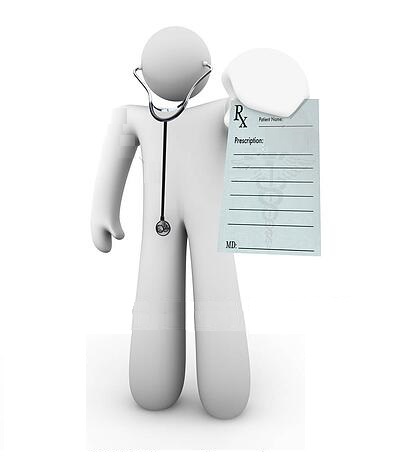
- Illustration: Law = doctor’s diagnosis. The diagnosis is valuable, it tells me what’s wrong, what to do, but it doesn’t make me healthy. So the Law is the diagnosis. But Jesus is treatment.
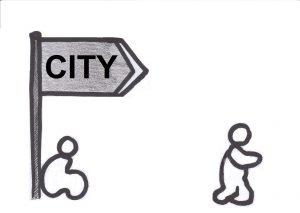
- Illustration: Law = a sign post. A sign post is helpful as it tells me where to go but the sign post has no power to get me to the destination. Sitting under the sign post will never get me to the desired place.
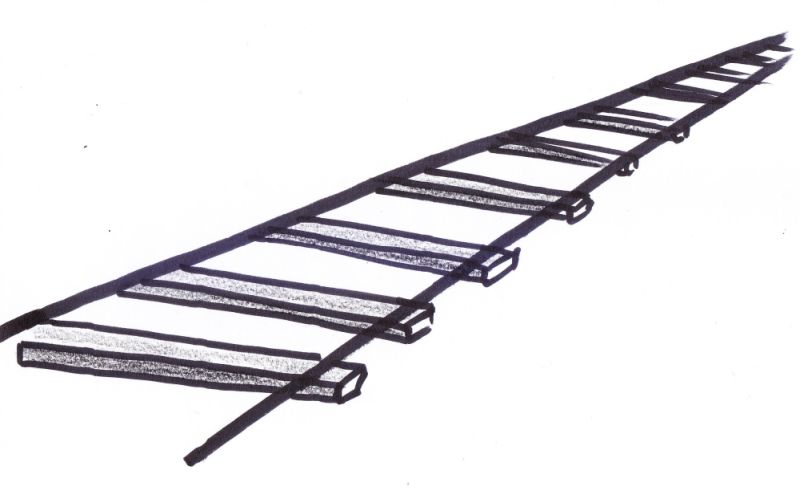
- Illustration: Law = railway tracks. Tracks tells me the direction, the way to go. But unless there is an engine the train will not move.

Summary
- The law gives no help whatsoever to keep the law
- The law has no power to ‘make me good’
- Do not ask of the law what the law can’t give!
- The law has no power to save … but that doesn’t mean it has no function whatsoever.
- If my question is: How do I get saved? > the law has no answer.
- If my question is: Who is God? What does he want? > the law has many answers.
- So: having received salvation by grace, having become a child of God through faith, having come into God’s kingdom … > how then does my Father & King want me to live?
- Obedience to the law… not to get into the kingdom but because I am in the kingdom
- Obedience to the law… not as condition to my salvation but out of thankfulness for salvation
Two more Illustrations
Illustration: Kingdom of God. Jesus as only door in.
- The law fulfills a function if I am still on the outside: explaining to me my state, urging me, even pushing me to go in.
- The law fulfills a function if I am inside the Kingdom: telling me how to live in the kingdom by the will of the King
- But: the law has absolutely no power to actually get me through the door!
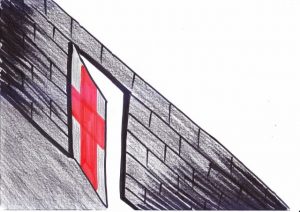

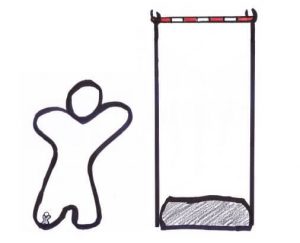
Illustration: The law = standard. The law is the mark, standard, measuring stick, mark to clear in high jumping.
- The law tells me how high I have to jump, but gives me no power to jump.
- Jesus jumps for me. If I get ‘into Christ’ by faith > he clears the mark for me. But the mark hasn’t come down.
- Some people think: In the Old Testament the standard was higher > so God judged harder. Now thankfully in the New Testament the standard is lower > so God is more gracious.
- This is total nonsense!
Rather: The law is holy, good, eternal, unchanging… why?
- Because the law is a revelation of God’s character
- God’s character will never change.
- Heb 13:8 “Jesus Christ is the same yesterday and today and forever.”
- Jam 1:17 “the Father… with whom there is not variation or shadow due to change.”
- God hated injustice in the Old Testament, he still hates injustice in the New Testament … because it hurts people.
- Murder was forbidden in the Old Testament, so is it okay in the New Testament? > Nonsense again!
- Actually the moral standard is not lowered by Jesus, rather it is raised:
- Mt 5:21-22 |You have heard … it was said ‘you shall not murder’ … But I say to you, if you are angry with a brother you will be liable to judgment.”
Is the ‘God of the Old Testament’ and angry God but in the New Testament (thankfully!) Jesus is gracious?
- Nonsense again! There is no disagreement or division in the Trinity.
Did the ‘standard come down’ in the New Testament?
- Nonsense again!
- Jesus had to die on the cross precisely because the standard hasn’t come down!
- Because of justice God must judge sin, in the OT and equally in the NT.
Is God just or gracious?
- His every action is always both just and gracious
- God is gracious in his judgment > or do you want evil to continue forever?
- God is just in his mercy > or do you think Jesus died for no reason?
How is the Law fulfilled?
- Jesus did not come to abolish the law but to fulfill it.
- Jesus fulfilled the law in my place to make me righteous.
Jesus fulfills the law in me. - Because Jesus is in my heart… because the Holy Spirit fills & guides me…
- Jesus and the Holy Spirit work in me to fulfill the law
- to the degree I give room to Jesus & the Holy Spirit in me, to that degree will I obey the law
- … but in God’s kingdom the law is obeyed. To go against the law means to go against Jesus and the Holy Spirit.